



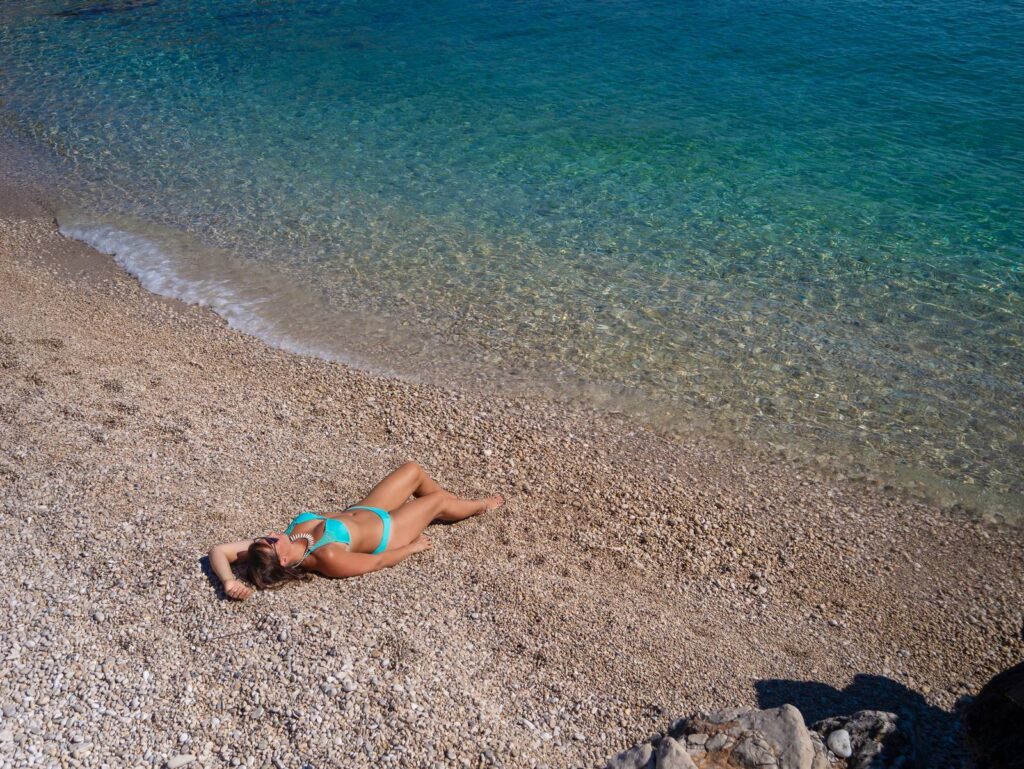
Il sole è un amico complicato. Serve alla sintesi di vitamina D, migliora il tono dell’umore, regola il ciclo sonno-veglia. Ma è anche il principale fattore di rischio per invecchiamento cutaneo e tumori della pelle. La buona notizia: l’equilibrio è raggiungibile, e in Sardegna — con la sua alta radiazione solare — basta sapere qualche dato.
Vitamin D in two lines
La vitamina D è ormone più che vitamina. Regola l’assorbimento di calcio, ma fa molto di più: ha effetti su sistema immunitario, muscoli, tono dell’umore, prevenzione di alcune patologie croniche. La sintesi cutanea avviene quando i raggi UVB colpiscono la pelle scoperta. Una parte di popolazione adulta in Europa ha livelli sub-ottimali di vitamina D, soprattutto in inverno.
How much sun you really need
The threshold varies with season, latitude, skin type and the surface exposed. But as a general rule for southern Sardinia:
- May to September, between 11 a.m. and 3 p.m.: 10 to 20 minutes with arms and face exposed, without protection, are enough for optimal production.
- Cold months: 20 to 30 minutes a day are ideal.
- Very fair skin: less time is enough.
- Dark skin: serve più tempo (la melanina filtra).
- Beyond that time: vitamin D production does not increase, il danno cutaneo sì.
The practical rule: 15/30/60
- 15 minutes: il momento dell’esposizione utile senza protezione (fasce orarie non di picco).
- 30 minutes: soglia oltre la quale la protezione solare è consigliata.
- 60 minutes in direct sun during the middle of the day: the point beyond which the harm outweighs the benefit, even with SPF.
How to protect yourself properly
- Sunscreen with SPF 30-50, applicata 20 minuti prima dell’esposizione.
- Reapply every 2 hours and after every swim.
- Do not trust the clouds: UV rays get through.
- Protect lips, ears and the soles of the feet: the forgotten areas.
- Wide-brimmed hat and UV sunglasses: they are not just a style choice.
- Evitare l’esposizione diretta prolungata between noon and 4 p.m. in summer.
The signs of too much sun
- Skin still hot and red after a shower.
- A feeling of tightness or itching.
- Whitish or solid patches.
- Headache, nausea: heatstroke setting in.
If any one of these signs appears: shade immediately, water, a cool shower and rest indoors.
At the Cormoran, shade everywhere
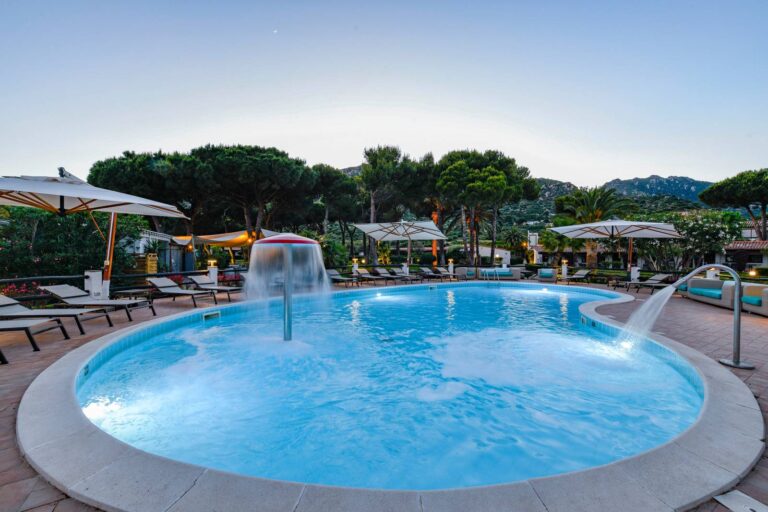
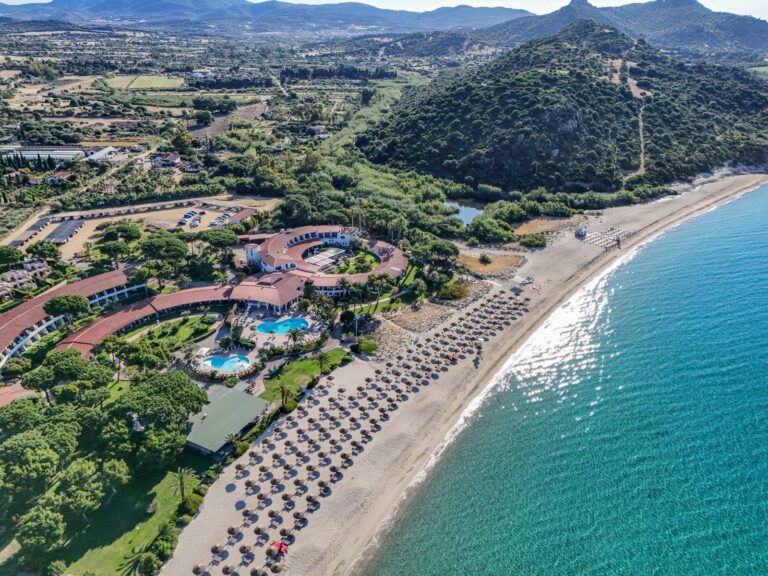
Alla nostra spiaggia riservata trovi ombrelloni e zone d’ombra naturale pensate per alternare esposizione e recupero. Il ritmo ideale di una giornata sarda è questo: mezz’ora al sole per la colazione, pomeriggio prevalentemente all’ombra, bagno frequente. Il sole intelligente è quello che prendi in dosi brevi e ripetute — non in overdose.
Cormoran Resort Villasimius
Discover our seasonal offers
Prenota direttamente e scegli il soggiorno più adatto al tuo viaggio in Sardegna.